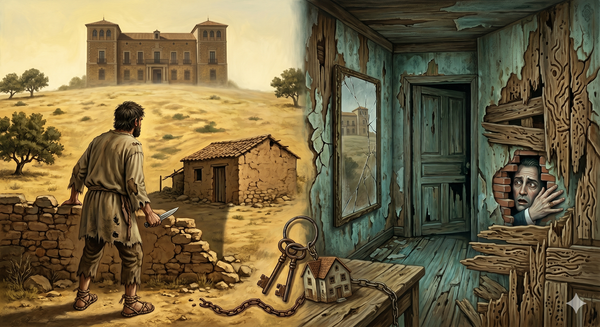
Solenoid, by Mircea Cărtărescu
"Solenoid," Mircea Cărtărescu's magnum opus, is a complex and challenging novel that transcends traditional genre boundaries.

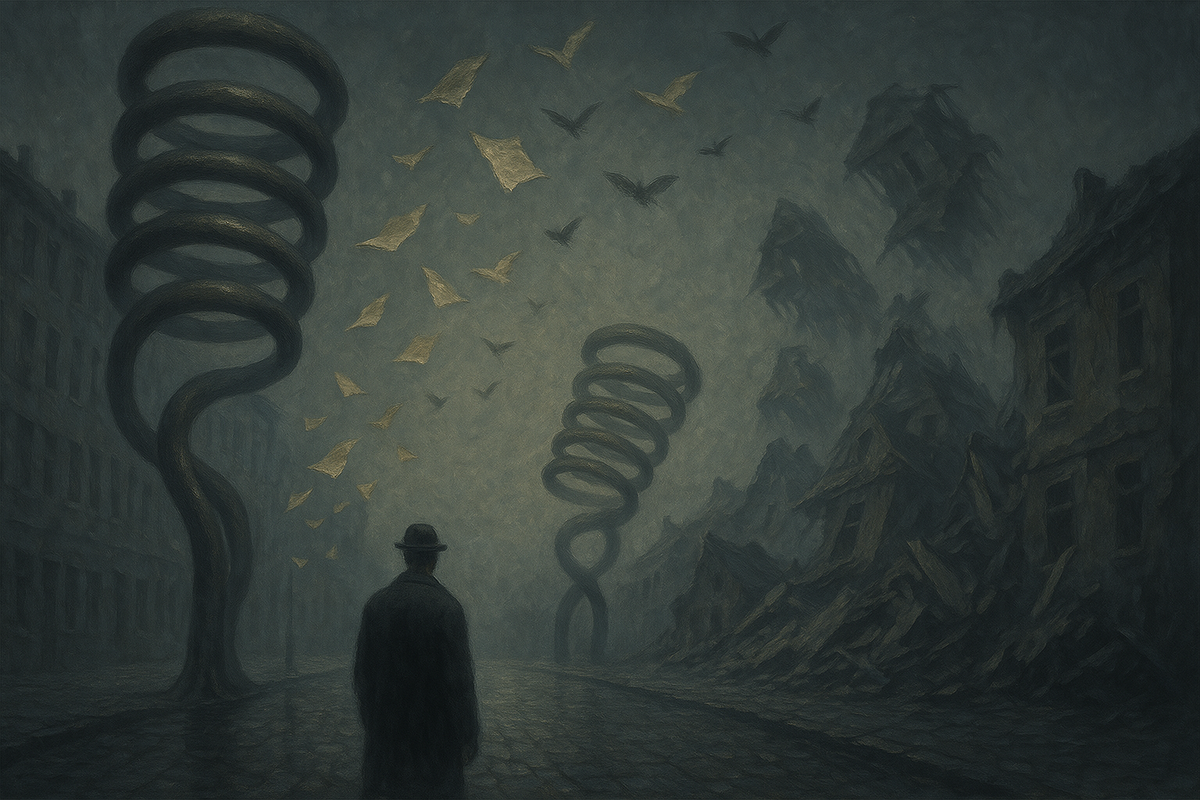
Solenoid is the kind of novel that seems to begin after it has already been going on for years, in the mind of a narrator who has spent so long living inside his own consciousness that reality itself has become difficult to separate from memory, fantasy, dread, and philosophical inquiry. Mircea Cărtărescu’s novel is sprawling and exacting, intimate and vast, anchored in the concrete life of an unnamed Romanian teacher in Bucharest yet continually opening outward into reverie, speculation, surreal encounter, and metaphysical uncertainty. It is a book that does not simply tell a story; it creates an atmosphere of persistent inward pressure, as though the text were continually trying to think beyond the limits of its own form.
What first strikes me about Solenoid is its refusal of narrative convenience. Cărtărescu is not interested in economy, suspense in the ordinary sense, or the kind of structural clarity that makes a novel easy to summarize. Instead, he builds through accumulation: of observations, digressions, bodily sensations, anxieties, recollections, and moments of hallucinatory intensity. The result is a book that feels simultaneously grounded and unstable, as if the everyday world has been rendered with such obsessive precision that it begins to tremble under the weight of everything that cannot be explained. Bucharest, in particular, becomes more than a setting. It is a psychological and metaphysical space, a city of decay, confinement, and strange possibility, through which the narrator moves as though through both external reality and an extended internal maze.
The novel’s unnamed narrator is easy to describe in terms of circumstance and harder to capture in terms of feeling, which is part of the book’s achievement. He is a Romanian teacher, once an aspiring writer, and his life appears, on the surface, diminished by disappointment, routine, and failure. But Cărtărescu is not interested in failure as a simple biographical endpoint. He treats it instead as a condition of perception, a mode of being in which frustration, self-consciousness, and alienation become ways of seeing too much and too clearly. The narrator’s consciousness is restless, vulnerable, and highly charged. He is the sort of figure who cannot stop turning inward, and while that inwardness can become oppressive, it also gives the novel its moral and emotional density. His life is not presented as exemplary, but as symptomatic: a life in which private disappointment, bodily unease, and intellectual hunger all converge.
One of the things that makes Solenoid so compelling is the seriousness with which it treats consciousness itself. Many novels evoke interiority; this one seems to inhabit it as both prison and instrument. The narrator’s thoughts do not merely accompany the action, because in a profound sense they are the action. His reflections on literature, memory, childhood, the body, illness, death, and the possibility of transcendence are not decorative digressions from the novel’s “real” subject. They are the subject. The book asks, insistently and without consolation, what it means to remain a self over time, what kind of knowledge memory can provide, and whether language can ever truly articulate the depths of experience rather than merely circle around them.
This is where Cărtărescu’s prose becomes especially remarkable. It is richly figurative, muscular, and exacting, but it is also patient enough to sustain long sequences of meditation without losing its force. The language moves in waves: it can be ecstatic, sardonic, bleak, or almost devotional in its attention to the smallest textures of existence. Reading it, I often had the sense that the prose was not simply describing thought but enacting it, allowing associations to proliferate until the boundary between sensation and idea grew difficult to identify. That stylistic ambition is inseparable from the novel’s thematic one. Solenoid is a novel about the limits of perception, but it is also a demonstration of what literary language can do when it refuses to remain within those limits.
The surreal and fantastical elements are essential to this effect. They are not interruptions of realism so much as revelations of its instability. Again and again, the novel introduces episodes that seem to belong to dreams, hallucinations, or allegory, yet these are not escape routes from the narrator’s life. They are intensifications of it. What the novel understands, and what I think it conveys with unusual conviction, is that reality is rarely experienced in a pure or neutral form. It is always being filtered through memory, fear, desire, and imagination. In Solenoid, the visible world is never just visible; it is haunted by other possible worlds, other orders of being, and other explanations that remain just beyond reach.
The title object itself — the solenoid — is one of the novel’s most suggestive features because it resists reduction. It can certainly be read symbolically, as a figure for hidden force, motion, transformation, or the possibility of channeling energy into new forms. But the novel’s deeper accomplishment lies in refusing to stabilize that meaning too neatly. The solenoid is less a puzzle to be solved than an image around which the novel’s concerns gather: pressure, transmission, invisibility, latent power, and the idea that what matters most may be operating beneath the level of ordinary perception. That ambiguity feels right for a novel so committed to complexity. It does not want to tell us what the solenoid “means” so much as to let it resonate across the whole structure of the book.
I also keep thinking about where I bought Solenoid: Cărturești Carusel, on Strada Lipscani 55 in Bucharest’s Old Town. The place itself felt almost like a preface to the novel — a multi-level bookshop bathed in light, with a café above and the unmistakable air of a destination rather than a mere store. It is one of those rare bookshops that has genuinely earned its “must-see” reputation, and buying Solenoid there gave the book a kind of local resonance, as though the city’s beauty and the novel’s density were quietly speaking to one another.
What I find most moving, though, is not the novel’s strangeness for its own sake, but the vulnerability that lies beneath it. For all its philosophical reach and formal audacity, Solenoid remains deeply human in its preoccupations. It returns again and again to the embarrassment of embodiment, the humiliations of daily life, the ache of unrealized possibility, the solitude of selfhood, and the longing to find some crack in experience through which meaning might enter. In that sense, the novel is not simply about transcendence. It is about the difficulty of transcending anything at all, and about the stubbornness with which the mind keeps trying anyway.
There is also, throughout the book, a persistent awareness of literature’s double nature. Writing is not presented as a cure, but neither is it dismissed as mere ornament or intellectual habit. It is a discipline of attention, a form of endurance, perhaps even a last defense against disappearance. The narrator’s relation to writing — shaped by failure, aspiration, irony, and longing — gives the novel a particularly poignant tension. Cărtărescu seems to ask whether literature can genuinely reveal truth, or whether it can only create a more elaborate and beautiful arena in which truth remains elusive. The novel never resolves that question. Instead, it inhabits it, and that unresolved quality is part of its integrity.
As I read Solenoid, I found myself returning less to its events than to its temperature: the pressure of its thought, the density of its imagery, the bleakness that is never merely bleak because it is always accompanied by curiosity, wonder, and the possibility of insight. It is a novel of failure, certainly, but also of imaginative persistence. It takes seriously the idea that a life can be both diminished and immense, both trapped and boundless, depending on the angle from which it is seen. That doubleness is one of the novel’s great strengths. It does not sentimentalize suffering, but neither does it reduce the self to damage. Instead, it observes what remains active within damage: thought, memory, desire, formal invention, and the urge to keep going.
To call Solenoid a masterpiece is perhaps to use a word that has already been worn thin by too much critical enthusiasm, yet the term does seem appropriate here, if only because the book is so unapologetically large in ambition and so uncompromising in execution. It does not ask for quick approval. It asks for surrender, patience, and a willingness to inhabit uncertainty. That is not always easy, and certainly not always pleasant, but it is precisely why the novel lingers. It enlarges the sense of what fiction can do: not merely tell us who we are, but press us into confronting how unstable, contradictory, and strangely luminous the experience of being human can be.
To be fair, “Solenoid” is not an easy read, nor is it meant to be. It challenged me to confront uncomfortable truths and venture into the depths of my own psyche. Yet, because I was willing to embrace its complexities, it offered a literary experience that is both profound and transformative. To me, Mircea Cărtărescu’s novel stands as a masterpiece of contemporary literature, showcasing his ability to push the boundaries of storytelling and reaffirming his place among the most important writers of our time.