On Barbara Kingsolver's Demon Copperhead
The novel is, in its bones, an act of insistence: this person existed, this is what it felt like from the inside, you will not be allowed to reduce this to an epidemic statistic.


Nobody's Archive
"First, I got myself born," announces the narrator of Barbara Kingsolver's Demon Copperhead, and the joke in it - the black comedy of an infant taking credit for surviving a birth that very nearly didn't happen - contains the novel's whole posture in miniature. His mother is somewhere out of it on the bathroom floor; the neighbour who might have helped is watching television behind a wall thin enough to hear through but apparently not thin enough for that sound to carry any obligation. The infant who will become Demon Copperhead arrives without ceremony or witness into southwest Virginia, into the final decades of the twentieth century, into a family structure already worn to the thread. Kingsolver gives us this scene in Demon's own voice - retrospective, dry, furious in the way that people are furious when they have accepted that fury is all they've been left — as if to say: from the very beginning, this child was making the record no one else would make.
That act of self-documentation, the refusal to be unwritten, is what Demon Copperhead is fundamentally about.
The novel follows Damon Fields - Demon - from birth through a childhood distributed across the state care system of Lee County, into the football circuits of rural Virginia, and finally into the opioid crisis that would kill or hollow out much of his generation in Appalachia. Kingsolver has spoken openly about the debt to Charles Dickens; this is a transposition of David Copperfield to the Appalachian present, with the Victorian orphan reborn as a red-haired kid whose stepfathers are replaced not by cold Victorian guardians alone but by the subtler tyranny of a pharmaceutical industry that had already cartographed his county before he could read. The comparison has been made so often in the critical reception that it risks becoming a frame that closes thinking down rather than opening it up. What makes the novel work - what makes it more than a work of literary homage - is less the Dickens architecture than Kingsolver's decision to inhabit Demon's voice with genuine consistency, to resist the pull of wisdom-from-above, and to let the story be narrated with the urgency of someone who does not yet know which parts of it he will survive.
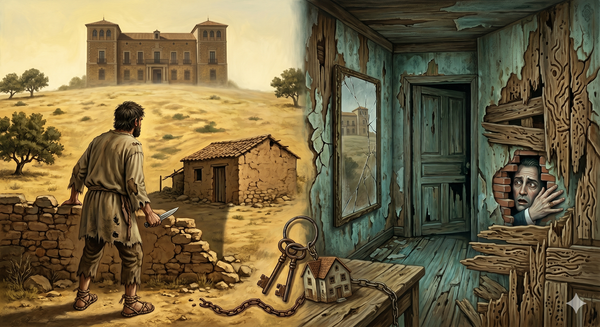
The Dickens parallel is worth examining carefully before setting it aside. David Copperfield's great engine is meritocracy: the orphaned boy who survives through talent, intelligence, and the kindness of a few exceptional individuals, who earns his way into a different life. Kingsolver takes this architecture and interrogates it without discarding it. Demon has talent - he draws, and his art is one of the novel's more quietly radical elements - but talent alone cannot lift him clear of a system whose design is not accidental. The coal economy that stripped Appalachia and then abandoned it, the pharmaceutical industry that subsequently arrived to fill the economic and psychological void - described with savage brevity as "God's gift for the laid-off deep-hole man with his back and neck bones grinding like bags of gravel... This was our deliverance. The tree was shaken and yes, we did eat of the apple" - the child welfare infrastructure that moves children between homes with the same administrative indifference as any Gradgrind or Murdstone of Victorian fiction: these are not simply obstacles that a sufficiently determined boy might outthink. They are architecture. The house was built this way. The novel is unsentimental on this point: "Anybody will tell you the born of this world are marked from the get-out, win or lose." But Kingsolver's Demon refuses the conclusion that marked means finished. Where Dickens's faith is ultimately in the individual, Kingsolver's novel insists on holding two truths simultaneously — that individual dignity matters absolutely, and that individual dignity alone is not enough against structural abandonment. Neither pure social determinism nor the consolations of uplift: this is the novel's central formal challenge, and it succeeds often enough to matter.
The gamble the novel makes with the Dickens frame is, in the end, one it mostly earns. Kingsolver's relationship to her source is more combative than reverential: where Dickens's faith lies in the salvific power of education and class ascent, Demon has no such avenue. What is available to him is the capacity to observe, to record, and to refuse to disappear into his case file - a more modest and, I would argue, more honest heroism than the Victorian model offered.
A word must be said about how the novel is written, because how it is written is inseparable from what it means. Kingsolver's decision to write Demon in a first-person Appalachian vernacular is the making of the novel and, occasionally, its liability. At its best, the voice has a rhythm that belongs to spoken rather than literary language - associative, fast, funny in the places where humour is the only thing left - and it carries the authority of someone who has learned to read people with precision because survival has required it. When Demon notices that the doctor writing his first prescription doesn't meet his eyes, or that the social worker holds her clipboard at an angle suggesting she has already written the outcome, these observations don't feel like sociology. They feel like fieldwork.
The Appalachian idiom is rendered with care. Consider the novel's introduction of its geography: "Dead in the heart of Lee County, between the Ruelynn coal camp and a settlement people call Right Poor, the top of a road between two steep mountains is where our single-wide was set." This is not scene-setting. It is social history compressed into a sentence: the coal camp that built the county and the settlement that named itself Right Poor and the single-wide at the top of the road - there is nowhere further up to go from here. "Holler" is not deployed as local colour but as geography - as a way of describing the relationship between mountains and smallness, between a landscape that channels everything downward and a social structure that works the same way. The word "blues" for OxyContin arrives in the text with a casualness that is itself an argument: this is how ordinary the destruction was. These pills had street names. They had textures and dosages that people learned the way they learn to read weather.
The liability is that Kingsolver occasionally lets the voice sharpen into something that feels authored rather than inhabited. There are passages where Demon's diagnosis of his own situation is too cleanly articulate, too perfectly calibrated, and the novelist's hand becomes visible behind the character's voice. This is the tension any literary ventriloquism of the dispossessed involves: the more fully you illuminate the interior life of someone the world ignores, the more you risk the accusation of speaking for rather than with. Kingsolver is mostly conscious of this risk, and the novel's best passages are those where Demon's understanding is partial and still forming - where his narration is catching up with his experience rather than explaining it. When the prose trusts Demon's confusion, it is at its most convincing. When it trusts his insight too completely, you feel the strain.
I came to Demon Copperhead carrying a reading formation that obviously prepared me for it. Nevertheless, my deepest allegiances are to writers who move laterally rather than forward - Sebald, whose prose is always circling something it cannot quite bring itself to reach; Bernhard, whose sentences accumulate like water pressure against a wall; Saramago, whose paragraphs run until they have exhausted everything an idea can mean. Into this preference, Demon Copperhead arrived as a novel built on velocity, on the forward pressure of events that do not pause for reflection, on the addictive pull of a first-person voice that simply insists on being followed. It took me a chapter or so to stop waiting for the lateral movement and go where the current was going. Once I did, I didn't stop.
The novel is, in its bones, an act of insistence: this person existed, this is what it felt like from the inside, you will not be allowed to reduce this to an epidemic statistic. At one point Demon recalls what it meant to grow up as a ward of the state with an offhandedness that takes a moment to land: "I thought all kids got a mammaw, along with a caseworker and free school lunch and the canned beanie-weenies they gave you in a bag to take home for weekends. Like, assigned." That "like, assigned" - the way systemic deprivation becomes absorbed into a child's baseline understanding of how the world works, indistinguishable from the ordinary furniture of life - is Kingsolver at her most quietly devastating. Demon doesn't know it is devastating. That is precisely the point. The child welfare system wants to reduce. The pharmaceutical industry reduced with great professional precision - maps, vulnerability indices, quotas. Journalists who arrived to cover the crisis reduced individual interiority to representative suffering. Kingsolver refuses the statistical. She forces the singular. The question I kept finding myself asking, as a reader whose formation prizes writing that thinks over writing that plots, is whether insisting on the singular constitutes thinking about it — and whether that distinction holds anywhere near as firmly as I habitually assume. Reading Demon Copperhead put pressure on the assumption. I am still not sure the pressure was enough to break it, but I noticed it in a way I did not expect.
Kingsolver is most penetrating when Demon reaches toward some understanding of what addiction actually is - not the moralist's version, but the interior one. "Everybody warns about bad influences," he says, "but it's these things already inside you that are going to take you down. The restlessness in your gut... The hopeless wishes that won't quit stalking you: some perfect words you think you could say to somebody to make them see you, and love you, and stay. Or could say to your mirror, same reason." That last phrase - the mirror as stand-in for the audience that was never there - compresses the novel's thesis about addiction into eight words. The craving for relief and the craving to be seen turn out to be, in Demon's telling, the same craving. The pharmaceutical industry understood this before he did.
What literature gives that no other medium can is access to interior lives at a depth and duration specific to the form. Film compresses; conversation disperses; statistics flatten. A novel can follow a consciousness for five hundred pages, inhabiting its evasions and partial understandings and moments of bleak clarity with an intimacy specific to the form. That is what Kingsolver is doing with Demon - and it is, I think, both the novel's genuine achievement and the silent argument it makes for its own existence. The self-portrait drawings scattered through the text are his equivalent of that access from the other side: not the official record, not the case file or the court report, but the texture of specific days, specific faces, specific losses as they were actually lived. I find these drawings - described in the prose rather than shown, which is deliberate - to be the novel's most quietly important element. They are what Demon makes instead of the life the system declined to give him.
The question of peripheral dignity - of what it means to insist on the interiority of someone the world has decided is a category rather than a person - cannot be thought about in the abstract. It has to be particular. Kingsolver seems to understand this. She does not write The Opioid Crisis. She writes Demon, and Maggot, and Dori, and Tommy, and the specific weight of each of their losses.
Where the novel strains, I believe, is at its edges. The secondary characters are occasionally less fully inhabited than Demon - which is partly the function of first-person narration and partly the cost of sustaining so much energy over five hundred pages. Some of the placed families exist at times as atmosphere rather than presence. The ending, which gestures toward survival and possibly the beginning of something repaired, walks a line between earned resolution and the temptation to offer the reader permission to feel that things might be okay. Kingsolver earns it, barely. But you feel the effort. The novel's emotional honesty has been so uncompromising for so long that any concession to hope risks feeling like a softening of the argument. The novel doesn't quite soften. But you notice the negotiation happening, and the noticing is its own kind of reading.
These are real costs that the enthusiasm surrounding the Pulitzer tended to paper over. But the alternative to a novel that strains under its own ambition is a novel that doesn't try. The genre has enough of those.
What the novel finally achieves - harder to name than its arguments or its characters - is something closer to a shift in the terms of accountability. The opioid crisis in Appalachia was not a natural disaster. It was a business decision repeated thousands of times by people with advanced degrees and company cars and clear performance metrics. The communities it destroyed were not random. They were specifically selected, researched, mapped, and targeted because they combined economic desperation with inadequate medical oversight and political invisibility. Demon Copperhead is one person. He is also the granular human cost of a transaction that was rationalised at every level until the body count stopped being rationalised and started being litigated.
Kingsolver does not make this analysis explicit in the voice of her narrator, which is correct. Demon doesn't have access to the Purdue Pharma board minutes. What he has access to is the way the pills felt, and the way his friends looked when they weren't getting better, and the particular quality of adult authority that presents itself as care while carrying a clipboard pointed the other way. He has the image of his mother that stays with him long after her death: "reaching as hard as her little body would stretch, trying to touch the blue sky, reaching for some peace. And getting it." The sentence trails off, suspended mid-motion on a repetition of "reaching", as if the grammar itself refuses to close what the opioid crisis opened. That access is, I think, the more important testimony.
Whether fiction can do more than bear witness, whether it can alter the conditions under which people like Demon are still being born into trailers in counties already marked on someone's distribution map, is a question the novel raises without pretending to answer. It shouldn't pretend to answer it. What it should do, and what it largely does, is make you feel the weight of the question as something other than rhetorical.
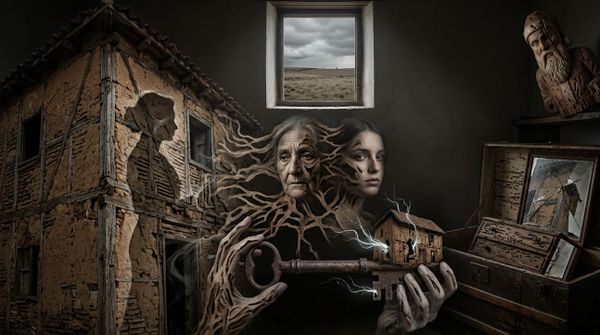
The cord is still attached. The house is still designed this way. And someone who was never going to be in any official archive just told you his name.