On Claudia Durastanti’s La Straniera
La Straniera is not a linear memoir of migration, but a constellation of scenes where language fails, doubles back, or invents itself on the spot.


Silence as Grammar
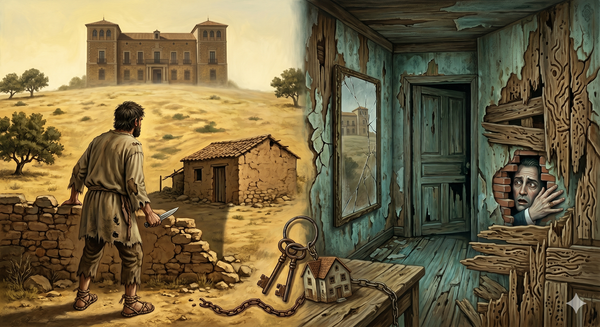
Imagine a household where silence is not an absence but a grammar. Where the hands speak before the mouth does, where a child learns to read faces the way other children learn to read pages, and where the word foreigner applies not only to the country you inhabit but to the very medium in which you are expected to exist. This is the world Claudia Durastanti reconstructs in La Straniera and it is a world so precisely rendered that you feel the specific weight of its air long before you have finished the first chapter. Not the air of any single place, but the composite air of everywhere and nowhere: the parched heat of Basilicata, the corrugated cold of a Brooklyn winter, the damp grey of London. All of it threaded together by one insistent question - what does it mean to belong to a language you did not quite inherit?
Both of Durastanti's parents are deaf and Italian, a detail that matters because it removes the comfortable alibi of national difference. The foreignness in this family does not run along a passport border. The mother is from the agricultural south, born near the Agri river in Basilicata during an unexpected snowstorm, in conditions Durastanti describes with the precision of someone who has been told a story so many times it has acquired the density of myth. The father is Roman, erratic and magnetic, shaped by boarding schools and dark cinemas. Their marriage is volatile, tender, and resistant to easy interpretation. The child Claudia grows up in the hyphen between their two registers - between the Italy of the north and the south, between spoken language and the lip-read approximation of it, between the Brooklyn she inhabits as a small child and the Lucanian village she is transplanted into at six. La Straniera is her attempt to give that hyphen a name, a texture, a cultural history. What emerges is not a memoir in the conventional sense, with its comfortable arc of wound and recovery, but something more structurally restless: part autofiction, part cultural essay, part elegy. It refuses the safety of a single genre, the way Durastanti has always refused the safety of a single country.
The book is organised into thematic sections - Family, Travels, Health, Work & Money, Love - that do not so much advance chronologically as accrete, layering scenes from childhood over moments of adult clarity, allowing the past to leak into the present without ceremony. Durastanti herself, in the book's afterword, confesses that she originally envisioned La Straniera as a text to be read in a non-linear fashion, every edition presenting a different chapter sequence, "as if you were reading a horoscope that's applicable to anyone and yet unique to every single person." That ideal survives in the published version as structural asymmetry. Some episodes are expanded into long, meditative paragraphs dense with observation; others are compressed into a single sharp sentence that arrives like a door closing. Durastanti understands that memory does not file itself neatly, and she trusts the reader to inhabit the resulting disorder. This is literary intelligence in its more demanding form: not the intelligence that explains, but the intelligence that withholds just enough to keep the reader alert.
Where the book achieves something genuinely remarkable is in its treatment of language - not as a given, but as a site of constant negotiation. Durastanti's mother never asked her children to learn sign language: "sign language is theatrical, visible, and you're always exposed. You're immediately disabled. But if you're not signing, you can just be a girl who's a bit shy, a bit distracted." This refusal to make deafness visible carries a complex logic. The mother's strategy was assimilation through oral effort - reading lips until her eyes and nerves "were shot," speaking loudly with an inconsistent accent, passing as "an immigrant with bad grammar, a foreigner." Durastanti grew up in the gap left by that strategy: heir to a household communication that was neither fluent speech nor sign, but something improvised and irreducible. It made her a writer for whom language is never transparent, never merely instrumental. Her Italian has a slight foreignness even in its original form: sentences that sometimes reach for abstraction and land, instead, on something unexpectedly concrete; a rhythm that oscillates between the lyrical and the declarative as if two different speakers were sharing the same page. In Elizabeth Harris's translation, this duality survives as a prose that feels calibrated, slightly off-centre in the best possible way - never quite domesticated, never allowing comfort to settle for long. To read Durastanti on language is to understand that fluency is always, to some degree, performance, and that the gap between what you mean and what you can say is not a failure but a condition.
This condition - the constitutive gap, the structural foreignness - is what elevates La Straniera above the personal. Durastanti is writing about deafness and displacement, yes, but she is also writing about the broader experience of being formed at a border rather than within a centre. The Italian south she evokes is itself a kind of internal exile: Basilicata, one of the poorest and least-visited regions of the peninsula, appears in these pages as a landscape of dignified neglect, of people who have learned to expect little from the state and much from each other. The sections set there carry an anthropological attentiveness that never tips into condescension - Durastanti looks at her mother's origins with the mixed gaze of someone who has left but not forgotten, who has escaped but not escaped. This double vision is one of the book's recurring ethical achievements: the refusal to simplify the places that made you, even after you have moved beyond them. When Durastanti reflects on the many European immigrants of the twentieth century who "took refuge in books," she places herself in that lineage while acknowledging its discomfort: "since we're not in exile and have no common cause that defines our leaving, any word that does define our condition proves to be offensive - the cosmopolitanism of our privilege, an outrage - because it concerns a migration we're almost always free to choose." It is the candour of someone who refuses the consolations available to her.
Her portrait of her parents is equally resistant to simplification. The father is a difficult figure - magnetic, erratic, capable of great warmth and careless damage. The mother is fiercer, more opaque, a woman who built a life out of stubborn will rather than social scaffolding: a small girl who, not long after losing her hearing, "poured a cauldron of boiling water on a neighbor who was gossiping about her," then "stood at the window laughing, while her family secretly approved." Durastanti does not redeem them in the memoir's conventional register; she does not arrive at forgiveness as a narrative destination. Instead, she holds them in the ambiguity where they actually lived - two people who loved each other badly for many years, who gave their daughter the gift of dislocation, and who exist in these pages as both wound and inheritance.
There is a remarkable passage in the book's afterword where Durastanti reflects on the nature of identity itself. A reader at a book tour in Spain asked her: "When did you realise your parents were deaf?" The question undoes her. She travels back into childhood and realises she cannot locate the moment of knowledge - "their deafness came as a story. And so, to me, in some strange ways, identity is always a story someone tells you about yourself." This is perhaps the book's deepest claim: that selfhood is not discovered but narrated, not a fixed map but, in Durastanti's phrase, "a complex and ever-growing crystal, with its light ever changing." To write about people who communicated in a partially visual, partially improvised register, and to render that communication in the linear architecture of prose, is itself a form of betrayal and a form of love. She holds both possibilities simultaneously, without flinching from either. It is the kind of moment that earns a book its place in the reader's long memory.
For me, reading La Straniera was not simply an act of literary appreciation. It was something a little closer to recognition - the mild vertigo of seeing your own experience refracted through someone else's formal choices. Like Durastanti, I grew up at the intersection of languages and geographies - between Portuguese, the language of a colonial inheritance I neither chose nor entirely refused, and English, the language I came to inhabit by choice and sustained affection. What Durastanti names as stranierità - foreignness, strangeness - I have come to think of as a structural condition rather than a biographical accident: the permanent marginality that is also, paradoxically, a kind of freedom. The person who belongs nowhere is also, in certain moments, the person who can belong anywhere, who carries their coordinates internally rather than externally. Durastanti does not romanticise this condition, and neither do I. But she understands it with a precision that feels, in the reading, like company.
Her cultural references are wide-ranging - American literature, Italian cinema, feminist theory, pop music - and she deploys them with the confidence of someone who has learned to build a home out of references precisely because no single geography could fully contain her. There is something almost curatorial in the way La Straniera assembles its intellectual furniture. Durastanti is not performing erudition; she is demonstrating how culture becomes, for the displaced person, a form of portable architecture.
The book is not without its limits. Occasional passages slide into a self-consciousness that registers as effort rather than ease, moments where the essayistic voice overreaches, where the need to theorise slightly outpaces the material. And there are sections, particularly in the London sequences, that feel less fully inhabited than the childhood scenes in Italy and the Brooklyn of the narrator's early years, as if the adult's experience has not yet had time to become myth. These are minor reservations in a book of considerable ambition and sustained intelligence, but they are worth naming, because Durastanti herself names her contradictions honestly enough that the critic owes her the same honesty in return.
What lingers, finally, is not any single scene or sentence but a cumulative atmosphere: the sense of a writer who has found, in the act of writing, a country that no passport could have given her. "Where do you come from, who do you belong to, how did you learn to speak," Durastanti writes in the afterword - a chant she has been hearing since childhood, one she answers not with a fixed identity but with the book itself, with the whole restless, accreting structure of it. The stranger, she suggests, is not someone who has failed to arrive; she is someone who has understood, more clearly than most, that arrival was never the point.
To read this book is to discover that the most precise maps are drawn from the inside of an absence.