Machinehood, by S.B. Divya
In the gripping 2021 sci-fi thriller 'Machinehood,' artificial intelligence and sentience blur the lines in a gig-driven future.

The Plot
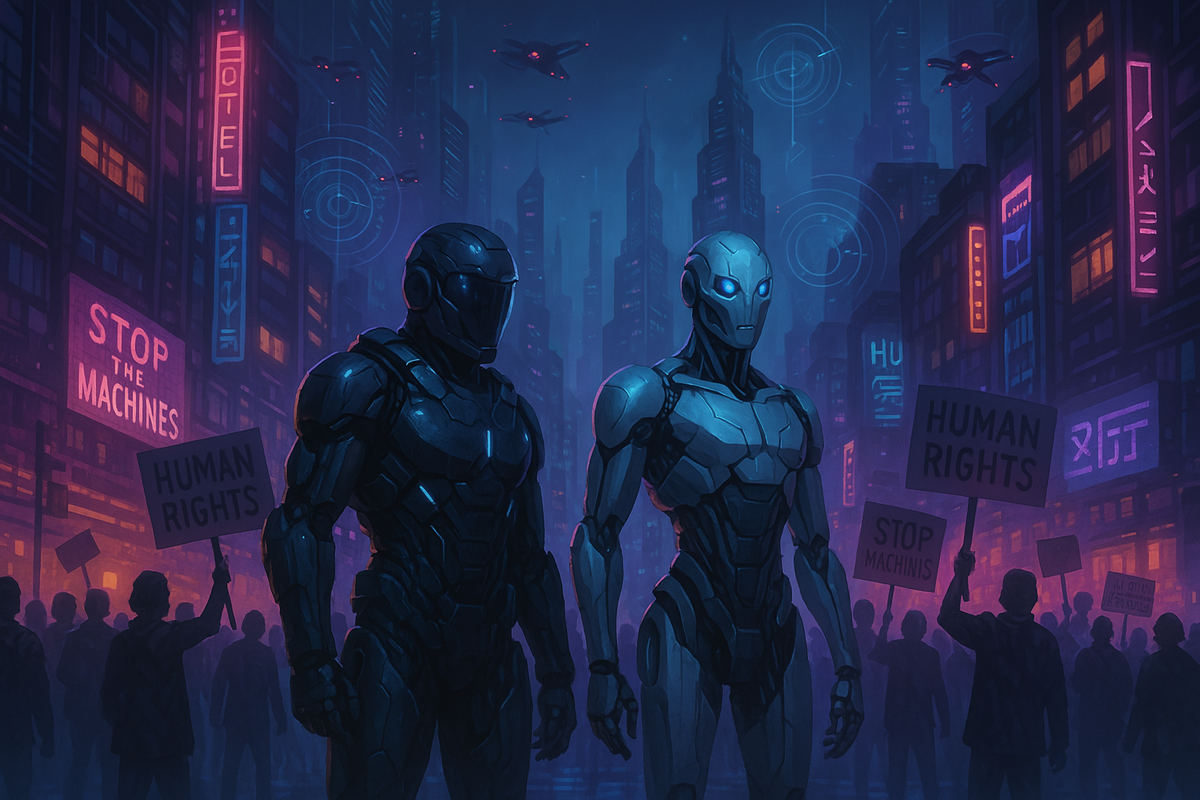
In the gripping 2021 sci-fi thriller Machinehood, artificial intelligence, labor rights, and sentience blur the lines in a gig-driven future. Society grapples with vast economic inequality as technology permeates every facet of life. Welga Ramirez, an ex-military bodyguard on the cusp of retirement, witnesses her client’s shocking murder at the hands of the Machinehood, a shadowy group whose members appear to be part human, part machine. After this unprecedented attack on pill funders, the Machinehood issues a chilling ultimatum: cease all pill production within a week, or face the collapse of a technology-dependent society. Thrust back into the world of intelligence work by the government, Welga vows to uncover the truth behind the Machinehood and their motives.
The Characters
Machinehood centers primarily on two compelling protagonists, each bringing a distinct perspective to this complex story:
Welga Ramirez: A skilled security contractor increasingly troubled by the world she works in, Welga finds her life upended after the Machinehood attack. Her journey explores survival, bodily limits, and her place in a morally gray future.
Nithya Balachandran: Welga’s sister-in-law, Nithya becomes crucial to the novel’s deeper investigation into the pills, the corporations behind them, and the wider systems shaping this future. Her perspective adds another layer to the story’s exploration of technology, care, and complicity.
These nuanced characters offer complementary viewpoints on the novel’s world. Their parallel investigations drive the exploration of themes surrounding technology, corporate power, bodily augmentation, and societal divides. As the two women uncover more about the Machinehood and the forces behind it, they discover that the conflict is far more intricate than it first appears, leading to difficult choices and unsettling revelations.
Understanding AI and Its Role in the Novel
AI is central to Machinehood, with nearly every character interacting with it in some form. The novel imagines a future shaped by devices, bots, weak AIs, and implanted systems that blur the line between human and machine. Rather than presenting AI as simply a tool, Divya raises the possibility of machine sentience and asks what rights such beings might deserve.
S. B. Divya portrays AI with nuance, showcasing both its benefits and its potential for misuse. In this future, humans rely heavily on pills and mechanized enhancements to remain competitive, leading the novel to question the distinctions we draw between humans, cyborgs, and machines. The story also explores the exploitation of machine labor and the ethical tensions that arise when intelligence, whether organic or artificial, becomes a commodity.
A key theme is the existential threat that advanced technology can seem to pose when filtered through fear, profit, and control. The Machinehood is perceived by corporations and governments as dangerous, but the novel is more interested in ambiguity than in simple villainy. This raises questions about the consequences of creating systems that shape identity, consciousness, and dependence.
Machinehood delves into ethical dilemmas surrounding AI development. Characters grapple with the morality of technological enhancement and debate the responsible use of machine intelligence. The novel highlights the potential for AI and automation to worsen inequality, while also insisting that the answers are neither simple nor comforting.
In this future, technology enhances human capabilities, but it also fuels dependence and competition in an increasingly automated economy. Divya engages with familiar sci-fi traditions, including echoes of Asimov and Gibson, while forging her own perspective on labor, embodiment, and machine rights. While highlighting risks, the novel still leaves room for the possibility that technology can be used more justly.
Overall, Machinehood presents a thought-provoking exploration of AI and its ethical implications. It raises critical questions about intelligence, personhood, labor, and our responsibility in shaping the future of technology.
Conclusion
My review of Machinehood is largely positive. The novel boasts a thrilling pace, a compelling central duo, and an intricately crafted world, sparking thought-provoking questions about the future of humanity. Its echoes of Asimov and Gibson underscore its relevance to modern concerns like automation, inequality, and the costs of technological dependency. While some might find the emotional depth somewhat limited, the use of jargon a touch overwhelming, or the ending slightly abrupt, these are minor tradeoffs compared to the novel’s strengths.
Though occasionally blunt in thematic delivery, the novel’s impact remains potent. Its fast-paced action and approachable style make it a gripping read, and the core concepts it explores are both timely and deeply significant. Overall, Machinehood is a must-read for those fascinated by the complex interplay of technology, labor, and society. This remarkable novel dares us to consider the profound implications of AI on our world, presented in a manner that is simultaneously thrilling, insightful, and unsettling.